ROSACEA
Rosacea is a chronic skin condition that affects how the skin responds to internal and external triggers.
It typically presents as persistent redness, flushing, sensitivity and inflammation, often concentrated through the cheeks, nose and central areas of the face.
Unlike general sensitivity, rosacea-prone skin is more reactive and less able to regulate itself, which is why symptoms can fluctuate and become difficult to manage over time.


-
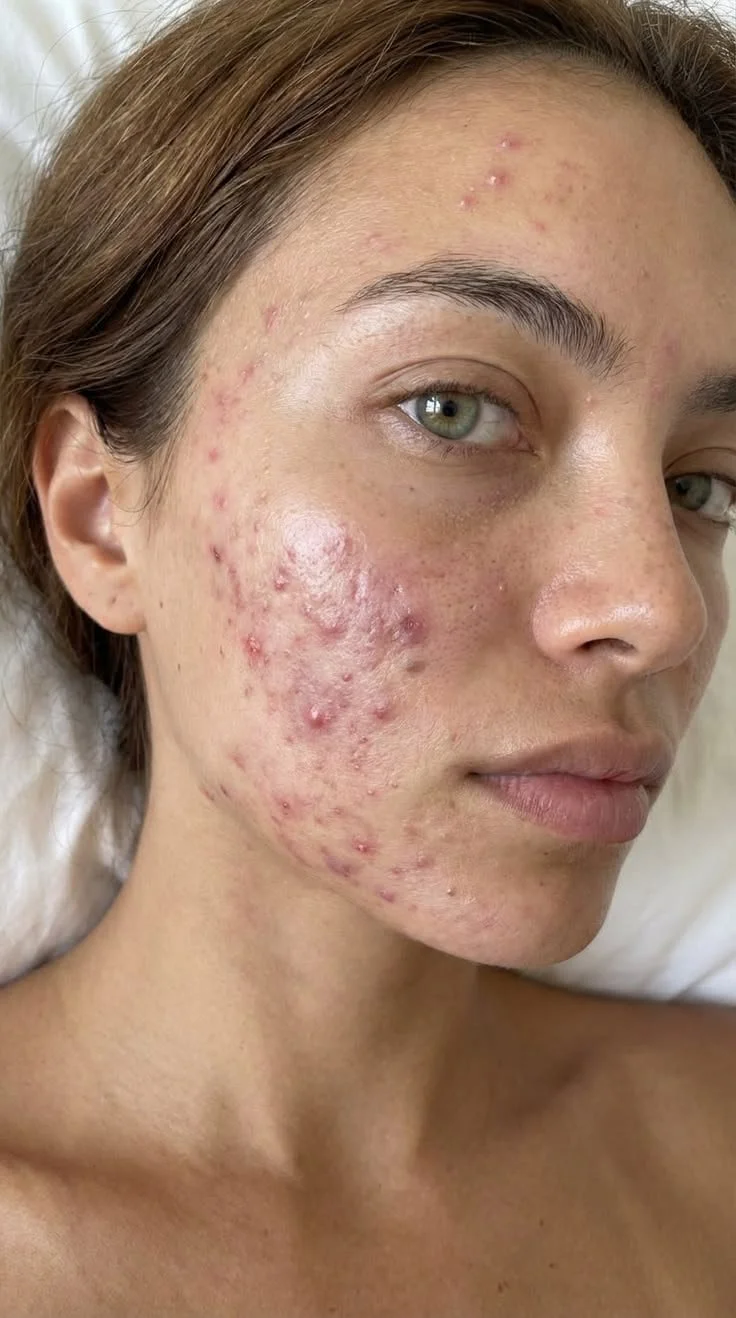
Rosacea typically presents as persistent redness, flushing and sensitivity, most commonly through the cheeks, nose and central areas of the face.
The skin may feel easily irritated, react quickly to heat or products, and flare up at times before settling again.
If redness is ongoing rather than occasional, and the skin feels consistently reactive, it is often an indication of rosacea rather than general sensitivity.
If you are unsure, a consultation allows the skin to be properly assessed and an appropriate approach recommended based on how it is presenting.
-
Rosacea develops when the skin becomes increasingly sensitive and reactive over time.
This affects how the skin regulates processes such as circulation and inflammation, causing it to respond more easily to everyday triggers. As a result, redness, flushing and irritation can become more persistent.
-
There is no single cause of rosacea.
It is typically influenced by a combination of factors, including genetics, environment, lifestyle and how the skin functions overall. These factors affect how the skin responds, rather than triggering one isolated issue.
-
Rosacea can present differently depending on the individual.
For some, it appears as more persistent redness, while for others it may show as flushing, sensitivity or intermittent inflammation. The pattern and intensity can vary, which is why it is not always immediately recognised.
This variation is also why a more individual, considered approach to treatment is required.

How do we treat rosacea at Aesthetology?
At Aesthetology, rosacea is treated by focusing on reducing inflammation, strengthening the skin and improving how it responds to triggers.
Rosacea-prone skin is typically more reactive and less able to regulate itself, which is why treatment is approached in a controlled and progressive way, rather than aggressively targeting redness.
Treatment is always adapted based on how the skin is presenting, but is typically built around DMK Enzyme Therapy, targeted homecare, and where appropriate, supportive treatments such as skin boosters.